
 Back to all posts
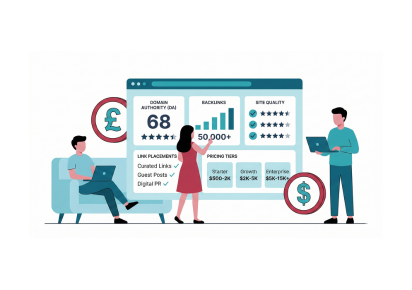
Quick Answer: Most businesses pay between $150 and $1,000 per link in 2026. The median for a quality, editorially placed backlink on a DA 30 to 50 site sits around $350 to $500. But that range only makes sense once you understand what you actually pay for. That's exactly what we break down in this guide.
Link building is not a single product. It's a category of services with different methods, quality levels, and deliverables. A $100 niche edit on a DA 20 blog and an $800 guest post on a DA 60 tech publication are both technically link building. But they produce very different outcomes.
Costs have shifted upward over the past two years. Publishers raised their placement fees as demand grew, and they recognize exactly what their inventory is worth today. Meanwhile, AI Overviews tend to feature content from well-linked, authoritative sources - making backlinks more important for visibility, not less.
This guide covers what you should expect to pay by service type, DA tier, and delivery model. We also break down the hidden costs that most pricing guides ignore.

Link Building Pricing by Service Type
Not all link building methods cost the same. And they shouldn't. Each approach carries different labor requirements, publisher relationships, and quality ceilings. Here's what the market looks like in 2026.
Guest Post Link Building
Guest posting involves creating original content and placing it on a third-party website with a contextual link back to your site. Your payment covers prospecting, outreach, content creation, placement negotiation, and reporting.
Market pricing for guest posts in 2026:
- DA 20-30 sites: Expect to pay between $150 and $300 per placement.
- DA 30-50 sites: $300 to $600. This range typically covers solid mid-tier blogs.
- DA 50+ sites: Premium placements start at $600 and easily scale past $1,500 for authoritative industry publications.
The difference between a $200 guest post and a $600 one usually comes down to editorial friction. Some publishers demand a 1,500-word expert article and manually review every single submission. Others accept 800 words with zero pushback. Sites with real organic traffic and strict standards simply cost more to access.
Rhino Rank's guest post service falls within the mid-range of these tiers. We structure our pricing by DA and traffic thresholds rather than arbitrary flat rates.
Curated Links (Niche Edits)
Curated links - sometimes called niche edits or link insertions - involve placing your link within existing, already-indexed content on relevant sites. There's no new article to write. Your link goes straight into a page that already has authority and rankings.
Market pricing for curated links:
- DA 20-30 sites: These entry-level edits run from $100 to $250.
- DA 30-50 sites: $250 to $500 per placement.
- DA 50+ sites: Securing a spot on high-authority indexed pages will cost you anywhere from $500 to well over $1,000.
Curated links often deliver better value per dollar than guest posts. A new guest post starts from zero. But a curated link on an established page delivers value from day one because the page is already indexed and carries topical authority.
The trade-off is control. Guest posts let you dictate the content, the anchor text placement, and the surrounding context. Curated links require you to work within someone else's existing content structure. Rhino Rank's curated link service vets every placement for relevance, traffic, and editorial quality before we place your link.
Digital PR Links
Digital PR earns links by creating newsworthy campaigns. We build data studies, surveys, reactive commentary, and expert quotes. Journalists then link to these assets because the content provides genuine value to their readers. This is exactly how brands land links on Forbes, TechCrunch, and major industry publications.
The cost structure looks completely different from guest posts or curated links. Digital PR is typically priced as a retainer or per-campaign.
- Campaign-based: You will generally spend $2,000 to $10,000 or more for a single campaign.
- Retainer-based: Monthly retainers range from $3,000 to upwards of $15,000.
- Effective cost per link: This varies enormously. A wildly successful campaign might drop your per-link cost to $50. A flop pushes it past $2,000.
Digital PR has the highest ceiling of any link building method. A single successful campaign can generate 50 or more links from top-tier publications. But it also carries the highest floor. Campaigns can underperform, and you pay for the agency's time regardless of the final link count.
Services like HARO and its modern alternatives sit in a sub-category here. They connect your experts with journalists looking for quotes to generate high-authority links. The real cost is your time rather than placement fees. However, agencies typically charge between $500 and $2,000 every month to manage this outreach at scale.
Managed Link Building (Full-Service)
Some clients want pure strategy. Not just raw link volume. Managed services take the entire process off your plate. We handle link prospecting, content strategy, and placement execution. You also get reporting and ongoing optimization.
Typical retainer pricing:
- Small business/startup: Expect to spend between $1,500 and $3,000 per month.
- Mid-market: Retainers typically range from $3,000 to $7,000 monthly.
- Enterprise: Large-scale campaigns cost $7,000 to $15,000+ each month depending on competition.
The strategic layer separates managed services from buying individual links. A strong partner allocates your budget across different link types, DA tiers, and anchor text profiles based on your specific competitors. They don't just bulk order the exact same links every month.
Our team at Rhino Rank offers this exact approach with our managed service. And we do it without the long-term contracts most agencies force you into.
Service Type Comparison
Service Type | Cost Per Link | Best For | Scalability |
|---|---|---|---|
Guest Posts | $150-$1,500 | Content-driven campaigns, controlled messaging | High |
Curated Links | $100-$1,000 | Fast authority gains, budget efficiency | High |
Digital PR | $50-$2,000 effective | Brand authority, high-DA links | Medium |
Managed Service | Varies by retainer | Strategic campaigns, hands-off approach | High |
How DA and DR Tiers Affect Pricing
Domain Authority from Moz and Ahrefs Domain Rating are the primary metrics driving link pricing across the industry. Higher authority means higher cost. But the relationship isn't linear.
Here is what you should expect to pay per link across DA and DR tiers in 2026:
DA/DR Range | Typical Cost Per Link | What You Get |
|---|---|---|
10-20 | $50-$150 | Foundational link diversity, new sites, niche blogs |
20-30 | $100-$250 | Established blogs, moderate traffic, good for volume campaigns |
30-50 | $200-$500 | The sweet spot for most campaigns - real authority, real traffic |
50-70 | $400-$1,000 | Industry publications, high-traffic sites, strong referral potential |
70+ | $800-$2,000+ | Premium editorial placements, major publications, brand-building |
The DA 30 to 50 range is where most businesses see the best return on investment. These sites have enough authority to move the ranking needle. They also get enough traffic to drive referral visits and maintain strict editorial standards so your link stays live long-term. We recommend allocating 60 to 70% of your budget to this tier. You can spread the remaining funds across lower-DA volume links and occasional high-DA premium placements. This produces the strongest results.
Beginners often chase exclusively high-DA links. A campaign built entirely on DA 60+ placements looks impressive in a client report. But five links on DA 60 sites will almost always produce less ranking impact than fifteen links across DA 30 to 50 sites at the exact same cost. Link diversity matters just as much as individual link authority.
But DA and DR alone don't tell the full story. A DA 40 site with 500 monthly visitors holds a vastly different value than a DA 40 site getting 50,000. Traffic, topical relevance, and editorial quality all dictate the real value of a placement. Any provider pricing purely on DA without considering these factors is cutting corners. You will definitely notice later.
In-House vs. Freelancer vs. Agency: The True Cost
Every pricing guide covers this comparison. Most just stop at the per-link cost. The real question is total cost of ownership. What do you actually spend to get results? This includes the hidden costs that never show up on an invoice.
Building Links In-House
Hiring a dedicated in-house link builder requires paying a full-time salary, providing expensive software, and absorbing management overhead:
- Salary: A competent link building specialist in the US market commands $50,000 to $80,000 per year.
- Tools: You will spend $2,000 to $5,000 annually for Ahrefs, email verification, and project management, alongside outreach software like Pitchbox or BuzzStream.
- Management overhead: Expect to dedicate 10 to 20% of a manager's schedule to QA, strategy, and direction.
A realistic output is 15 to 30 links per month. That brings your fully loaded cost per link to roughly $250 to $550. That is competitive with agency pricing. But you carry the risk of a single point of failure. Your pipeline stops completely when your link builder takes a holiday, gets sick, or leaves.
In-house teams offer excellent control. They also build deep institutional knowledge. A good internal link builder develops distinct publisher relationships over time. But the ramp-up period is significant. Expect three to six months before a new hire operates at full capacity with an established outreach pipeline.
We cover this in much greater detail in our full guide on in-house link building vs outsourcing.
Hiring Freelancers
Freelancer rates for link building vary wildly.
- Budget freelancers: Expect to pay $30 to $100 per link.
- Experienced freelancers: Rates typically sit between $150 and $400.
- Specialist freelancers: High-end talent commands $300 to well over $600.
Quality control is the real hidden cost here. You have to vet their work. You need to check placement quality and monitor for PBN links. Managing that output takes serious time. And that time carries a heavy cost even without a formal receipt.
Budget freelancers charging $30 to $100 are almost always using private blog networks. They rely on link farms and recycled placement sites. These links won't just fail to move the needle. They can actively damage your rankings through a Google penalty.
Working with a Link Building Agency
Agency pricing typically ranges from $300 to over $1,000 per link. Monthly retainers often sit between $2,000 and $10,000. But you get things freelancers simply can't provide. We are talking about established publisher relationships. You get strict vetting infrastructure and actual accountability. Consistent reporting comes standard.
The trade-off is the price tag. Agencies carry heavy overhead. We pay for staff, enterprise tools, and QA processes. That overhead gets built directly into the final price. But for most businesses, the reduction in risk justifies the premium. Consistent output matters.
Transparency separates a good agency from a bad one. Can they show you actual placement examples? Do they explain their exact vetting criteria openly? Do they publish their pricing for everyone to see? Rhino Rank operates with no contracts and zero minimums. We publish our pricing directly on the website. Most competitors avoid doing that.
Total Cost of Ownership Comparison
Factor | In-House | Freelancer | Agency |
|---|---|---|---|
Monthly spend (20 links) | $4,500-$7,000 | $1,500-$6,000 | $4,000-$10,000 |
Cost per link (fully loaded) | $250-$550 | $75-$400 | $300-$1,000 |
Quality consistency | High (if well-trained) | Variable | High |
Scalability | Limited (1 person) | Moderate | High |
Hidden costs | Tools, management, hiring | QA, vetting, risk | Lower (included) |
Ramp-up time | 3-6 months | 1-2 weeks | Immediate |
What Drives the Price of a Backlink?
Understanding the variables behind link pricing helps you evaluate any quote you receive. And not just ours.
Domain authority and traffic act as the two biggest cost drivers. A link from a site with real organic traffic costs more. The supply of these authoritative sites is highly limited. Demand remains constant. Publishers know exactly what their inventory is worth.
Topical relevance adds another layer to the math. Links from sites in your exact niche carry a premium because the available pool is much smaller. A fintech company hunting for links on strict finance blogs will pay significantly more than an e-commerce brand targeting general lifestyle sites.
Content requirements vary wildly by publisher. Some sites gladly accept an 800-word contributed article. Others demand over 2,000 words of expert content featuring original data. Their editorial teams review every single line. That heavy content production cost gets baked directly into the link price.
Industry competitiveness directly affects the basic economics of supply and demand. Finance, legal, healthcare, and gambling consistently rank as the most expensive niches. Publisher inventory in these specific spaces is incredibly tight. Stricter editorial guidelines and YMYL (Your Money or Your Life) quality standards keep the barrier to entry high.
Link placement matters just as much. A contextual link within the body of an article passes far more value. Buried author bio links or sidebar placements simply can't compete. In-content placements cost more. They perform better.
Follow vs. nofollow is another pricing factor that catches buyers off guard. Dofollow links pass PageRank directly and carry a strict premium. Nofollow links from authoritative sites still provide brand exposure and referral traffic. But they won't move the ranking needle in the same way. Most reputable providers sell dofollow placements as the standard baseline. Always confirm this before handing over your credit card.
Publisher pricing trends dictate the modern market. Over the past two years, publishers have increased their rates by roughly 20 to 40 percent. They fully recognize the commercial value of their digital inventory. This is a market-wide shift rather than an isolated provider issue. According to Ahrefs' analysis of link building costs, the average cost per link keeps climbing steadily year over year. The days of landing quality editorial placements for under $200 are long gone. Budgets that worked perfectly in 2024 will need serious adjusting for 2026 rates.
Link Building Packages: What to Expect
Most B2B brands want a predictable monthly spend. That makes packaged pricing the industry standard. Here is what the market actually looks like in 2026:
Starter packages: Expect to pay between $500 and $2,000 monthly for 5 to 10 links. These usually target the DA 20 to 40 range. This tier works well for small businesses and new websites. It also helps established brands maintain their current authority. You aren't chasing aggressive growth here. Instead, you are building foundational link diversity.
Growth packages: Mid-tier retainers cost $2,000 to $5,000 monthly and deliver 10 to 25 links across mixed DA tiers. This is where most campaigns start moving the needle. A solid growth package blends curated links with guest posts across different authority levels. And your reporting should prove placement quality rather than just padding the volume metrics.
Enterprise packages: Scaling up means spending $5,000 to over $15,000 monthly. These plans secure 25 to 50 or more links every month, blending high-DA placements with potential digital PR campaigns. At this volume, your provider needs serious production capacity. They also need an extensive publisher network so they don't end up recycling the exact same sites month after month.
Stop fixating purely on the per-link price. You need to ask better questions:
- Exact DA or DR ranges. Vague metrics usually mean low-quality placements.
- Content creation costs. Are you paying extra for the writing?
- Do they provide actual placement URLs in the reporting, or just aggregate metrics?
- Watch out for minimum commitments and long contracts.
- Ask what happens when a webmaster inevitably removes your link.
Our own link building packages at Rhino Rank are structured by DA tier. We use transparent per-link pricing. We don't force minimum contracts, and we provide full placement reporting.
How to Spot Overpriced (and Underpriced) Link Building
Expensive links aren't always worth the money. Cheap links aren't always a scam. But the extremes usually match their appearance exactly.
Signs you are overpaying:
- Paying $800 or more for DA 30 to 40 placements that drive zero organic traffic.
- Agencies that demand 6 to 12-month contracts before proving their value.
- If basic package pricing requires a sales call and a custom proposal, their margins are often inflated based on whatever they think you will pay.
- Hidden costs. Setup fees and strategy retainers piled on top of the per-link cost without clear deliverables attached.
Signs the pricing is too low:
- Per-link costs dropping below $75 for DA 30+ placements. The math simply fails at that price point for legitimate outreach. Moz's link building guide confirms that quality manual outreach requires serious time investment per link.
- Anyone promising 50 or more monthly links for under $500 total spend.
- Zero transparency regarding placement sites. You just get a report later filled with obscure URLs.
- Placements lacking editorial standards. Think thin content, zero-traffic domains, and pages completely stuffed with outbound links.
The buyer's checklist before signing with any provider:
- Can you see their pricing online, or is a sales call mandatory?
- Ask for live placement examples from recent campaigns.
- Metrics matter. Do they vet using DA alone, or do they factor in traffic and relevance?
- What is their replacement policy if a link drops within 30, 60, or 90 days?
- Check for lock-in periods and minimum spend requirements.
- Do they provide white-label reporting for agency partners?
Is Link Building Worth the Investment in 2026?
The data says yes. Look at Backlinko's analysis of 11.8 million Google search results. They found the number of domains linking to a page correlates with higher rankings more strongly than almost any other metric. Pages sitting in position one have an average of 3.8x more backlinks than pages stuck in positions two through ten.
That correlation hasn't weakened as Google's algorithm has evolved. If anything, it has only grown stronger. Google actively uses links as a core trust signal within its E-E-A-T framework. Sites with healthy backlink profiles are far more likely to trigger AI Overviews, which now dominate a significant percentage of search results.
Calculating the ROI is straightforward. Say a single quality link helps a page move from position eight to position four. The incremental organic traffic value typically exceeds the cost of that link within two to three months depending on keyword value and conversion rates. And unlike paid advertising, that link continues passing value for years. Links act as a compounding asset. They aren't just a recurring expense.
But link building alone won't save you. It only works when paired with strong on-page SEO and quality content. Technical performance matters too. Links amplify what is already working. They cannot fix a broken site, thin pages, or a terrible user experience.
For businesses ready to invest, the barrier to entry is surprisingly low. You don't need a $10,000 monthly retainer to start building authority. A focused campaign targeting 10 to 15 quality links per month in the DA 30 to 50 range is highly effective. That typically costs between $2,000 and $5,000 - which is enough to move the needle for most competitive niches.

Frequently Asked Questions
What is the average cost of a backlink in 2026?
The average cost sits between $300 and $500 for a placement on a DA 30 to 50 site with real organic traffic. Budget options on low-authority sites run as low as $50 to $100. But premium placements on DA 70+ publications regularly exceed $1,000. Quality dictates the price tag.
How much should a small business budget for link building?
We recommend starting with $1,000 to $2,000 per month. That budget secures 5 to 10 quality links in the DA 20 to 40 range. It's enough to build foundational authority for a new or smaller website. You can always scale up once you see traction.
Are cheap backlinks worth buying?
Almost never. Links priced under $75 for DA 30+ sites usually live on private blog networks, link farms, or low-quality foreign-language domains. They carry high penalty risk. And they rarely move the needle on rankings. The old saying holds true - you get what you pay for.
How many backlinks do I need per month?
It depends entirely on your market. For most mid-competition niches, 10 to 20 quality links per month is enough to drive ranking improvements within 3 to 6 months. Highly competitive industries like finance, legal, and SaaS operate differently. They often need 30 to 50 or more links per month just to compete.
Does link building still work in 2026?
Yes. Backlinks remain one of Google's strongest ranking signals. Their importance has actually increased with AI Overviews pulling citations from well-linked, authoritative sources. The specific methods have evolved - quality and relevance matter far more than raw volume - but the fundamental principle hasn't changed at all.
What's the difference between cheap and expensive links?
Cheap links costing $50 to $150 typically come from low-authority sites. These domains suffer from minimal traffic, thin content, and zero editorial oversight. Premium links cost anywhere from $500 to well over $1,500. But they come from established publications with genuine audiences and strict editorial review processes. They offer long-term content stability. These are the placements that actually influence rankings and stay live for years.
Should I pay per link or use a monthly retainer?
It depends on your specific goals. Per-link pricing gives you maximum control and transparency. You know exactly what each placement costs, and you can scale up or down as needed. Monthly retainers work better for businesses seeking a strategic partner. We manage your entire link profile, handling anchor text diversity, DA distribution, and competitive gap analysis. If you are just starting out, per-link pricing lets you test the waters without a massive commitment. But if you want to scale an established campaign, retainers offer much better value at volume.
How long does it take for link building to show results?
Most businesses see measurable ranking improvements within 60 to 90 days of a consistent campaign. That timeline depends heavily on your starting position. It also relies on target keyword difficulty and acquired link quality. A new website in a tough niche might need four to six months of sustained effort before organic traffic growth actually kicks in. Consistency is everything. Sporadic link building rarely produces meaningful results.
related Blog Posts




Join 2,600+ Businesses Growing with Rhino Rank
Sign Up
Stay ahead of the SEO curve
Get the latest link building strategies, SEO tips and industry insights delivered straight to your inbox.